


Osteochondrosis is a pathology that occurs in both men and women, young and old, and consists of degenerative changes in the intervertebral discs.The main reason is physical inactivity.Due to the lack of physical activity, blood circulation in the tissues adjacent to the spine deteriorates; the intervertebral discs, not having their own blood vessels, experience a lack of nutrition and gradually begin to “shrink out.”Treatment of osteochondrosis is always complex.It is based on maintaining an active lifestyle, proper nutrition, normalization of daily routine, and playing sports.
Traditional medicine offers different methods of therapy: medication, physiotherapy, alternative methods - hirudotherapy and acupuncture, mud therapy and balneotherapy, as well as massage and manual therapy, exercise therapy.Patients may be recommended original therapeutic courses.Yoga classes and exercises with a fitness ball will bring undoubted benefits.
Ointments, tablets, injections
Osteochondrosis itself does not cause pain.A symptom such as pain occurs with the progression of the disease, starting from stage 2.Patients also note, first, a slight deterioration in flexibility, and then a significant limitation in the motor activity of the spine.In advanced cases, patients are forced to turn their entire torso to look around.
Painkillers
Ointments are the first thing a person grabs when they feel back pain.For the most part, they do not cure, but only relieve pain.These are compositions based on:
- NSAIDs;
- heating components;
- with bee venom;
- combined (NSAIDs + chondroprotectors).
External NSAID-based products are also available in oral form (tablets, capsules, sachets) and injections.

Nutrition for intervertebral discs
Separately, it is worth mentioning chondroprotectors, which are available in three forms:
- external;
- for oral administration;
- injections.
Rarely do patients use them on their own.In addition, to choose the right drug, you need to consult a doctor.Chondroprotectors act directly on the cause of osteochondrosis - they nourish cartilage.Products for external use are unlikely to significantly affect the situation - only a small part of the beneficial substances will reach the intervertebral discs, so doctors simultaneously recommend taking such drugs orally, and sometimes giving injections.
Muscle relaxation and stress relief
Also, drug treatment of osteochondrosis includes taking:
- muscle relaxants - drugs that relax muscles, which is very important for osteochondrosis;
- sedatives (tincture of valerian or motherwort) or tranquilizers - they improve the overall emotional background, allowing the patient to look at the disease from the other side and take care of himself.
Physiotherapy: in the clinic and at home
In case of degenerative-dystrophic processes in the intervertebral discs, it is important to normalize blood circulation in the paravertebral tissues.Physiotherapy can help with this.Many procedures can only be completed in a specialized medical institution:
- laser exposure;
- EHF;
- electrophoresis;
- ultrasound;
- magnetic therapy;
- vibration therapy.
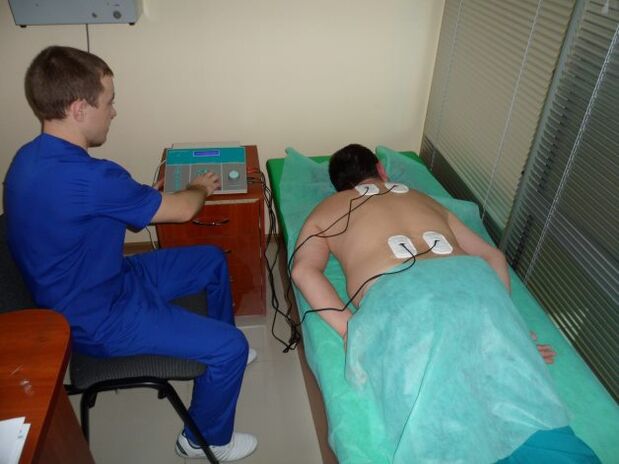
The last 2 types of physiotherapy can be done at home yourself, having special therapeutic devices.
Also, at home, you can treat the spine using devices that are based on the impact of pulsed current on the human skin.The efficiency of the devices is high.At an early stage of osteochondrosis, you can achieve a complete cure without taking pills.If the condition is neglected, you will have to work long and hard, which will lead to stable remission and life without pain.Then the treatment will need to be repeated.
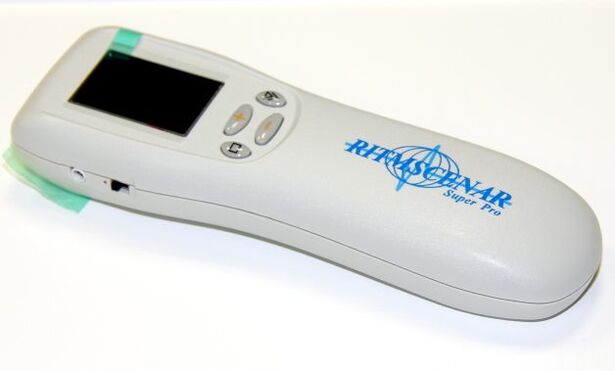
Just a note.Women expecting a child should consult a doctor about home treatment for osteochondrosis using physiotherapy devices.
Hirudotherapy and acupuncture
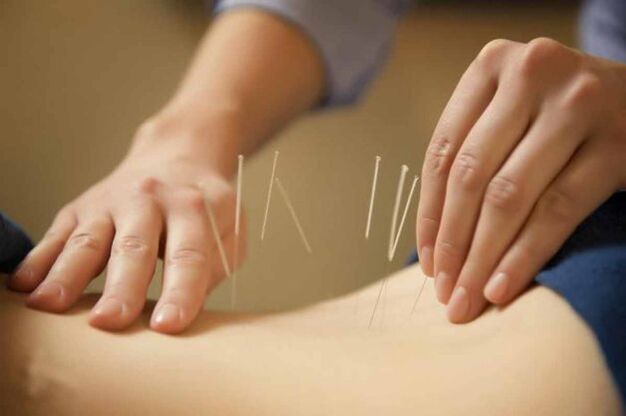
Both types of treatment are effective.The impact occurs on biologically active points, resulting in:
- the flow of lymph and blood in the paravertebral tissues is normalized;
- spasming muscles relax;
- leeches inject a special enzyme into the wound, which acts as an anticoagulant (thin the blood).
Hirudotherapy is prohibited for pathologies of the hematopoietic system, allergies to leech saliva, hemorrhagic diathesis, infectious diseases, neoplasms (benign and malignant), and mental pathologies.Acupuncture has approximately the same list, with the exception of blood diseases and allergies.
Just a note.Both types of therapy are prohibited for pregnant women.
Mud therapy and balneotherapy
Both methods are used exclusively in sanatoriums that are located “on the waters”.Mud therapy involves smearing yourself with therapeutic mud containing many useful substances.Balneotherapy is the ingestion of mineral water and bathing in it.
Both methods have proven themselves to be excellent.Under the influence of mud and mineral water, pain and inflammation go away, the metabolism and psycho-emotional state of the patient are normalized.A referral for such sanatorium treatment is issued by the attending physician, taking into account all the concomitant pathologies of the patient.
Massage and manual therapy
The main task of a massage therapist and chiropractor is to remove muscle spasms and tone muscles that are likely to atrophy.By removing such a clamp, the patient is highly likely to experience significant relief or complete disappearance of pain.
During the process, the specialist’s hands work both external and deep muscle groups.This improves the flow of lymph and blood, as a result of which the intervertebral discs receive adequate nutrition and moisture.
Just a note.Both massage and manual therapy have contraindications.A qualified specialist must study the patient’s medical history and only then begin treatment.
Exercise therapy and original techniques
Physical therapy is an important component in the treatment of osteochondrosis.Regular exercise allows you to maintain the flexibility of your spine.It is unlikely that the doctor at the district clinic will recommend doing them.However, the patient has the right to clarify whether, with an established diagnosis, he can do exercises from these techniques.
General recommendations for practicing therapeutic exercises:
- Be sure to ventilate the room.It is better to practice with an open window or in nature.
- Exercise should not cause pain, so exercise during the period of remission.
- Start with low reps.
- Watch your breathing - it should be even.
- Exercise regularly, without missing a day.
The advantages of the author's methods are that they can be practiced even in the acute stage.For example, the first complex helps relieve muscle tension and pain due to osteochondrosis.In this case, the patient is asked to perform simple static exercises.
Another technique promotes micro-movements.It is designed for the elderly and is accessible to patients with minimal physical fitness.For young people, the doctor recommends gradually increasing the number of repetitions and approaches, which will load the spine according to age and strengthen the muscle corset well.
Yoga
This is a set of spiritual, physical and mental practices.Yoga classes for osteochondrosis have a positive effect not only on the spinal column, but also on the psycho-emotional state of the patient.Asanas (static poses) can be performed to the best of your physical abilities, gradually developing and, ultimately, achieving ideal execution.
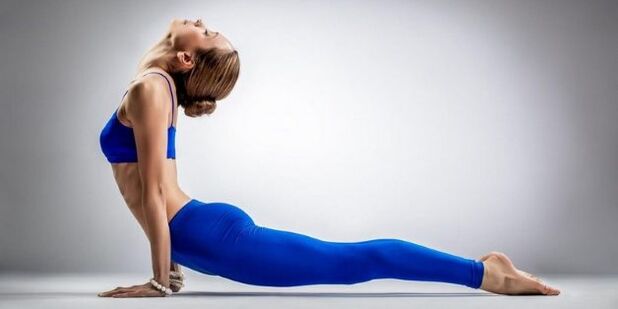
For osteochondrosis, it is recommended to perform the following complex:
- Savasana is the pose of the dead.
- Vrikshasana – tree pose.
- Shalabhasana – locust pose.
- Marjariasana - cat pose.
- Setu Bandha Sarvangasana - half-bridge pose (shoulders and head lie on the floor).
- Paschimottanasana - bending forward with hands grasping the feet and fully extending the spine.
- Bhujangasana - cobra pose.
- Utkatasana – mountain pose.
- Ushtrasana – camel pose.
- Vaparita karani is a birch tree, but the hips lie on a soft cushion located on the floor.
The listed asanas can be varied - some can be removed, some can be left, or new ones can be added.Complex poses are first done “as it turns out”, then, when the spine becomes more flexible, according to all the rules, striving for the ideal body position.
Fitball
A fitness ball is an excellent tool for restoring flexibility to the spine.Working with him is convenient and easy.It is enough to lie on your back on a fitball and feel how the vertebrae fall into place and the spine stretches.
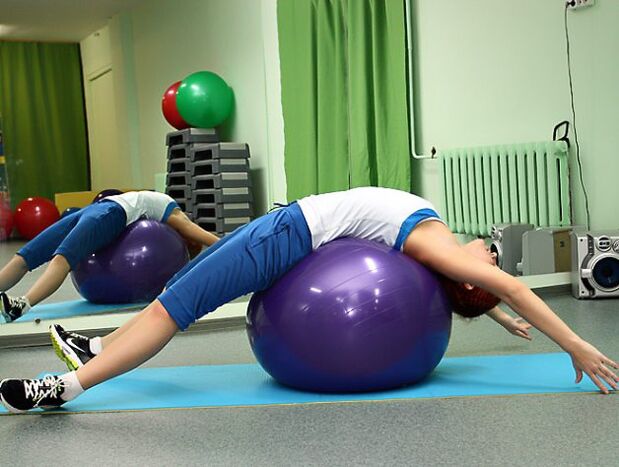
The complex for osteochondrosis includes several exercises.Here are 3 of them, the simplest ones:
- Lie with your stomach on the ball, with your limbs on the floor.Raise your right arm and left leg at the same time.Switch limbs.Repeat at least 5 times.
- Lie on the ball with your back - smoothly, placing your feet firmly on the floor, throw back your head and stand on an imaginary bridge.Lie in this position for several minutes.If you feel pain, stop.
- Lie on the ball with your stomach again.Place your limbs on the floor.Now start rolling forward, quickly moving your hands until the ball is under your knees.Roll back until the exercise ball is under your chest.
Just a note.Exercises with a fitball can be considered safe for the spine.However, it is better to consult a doctor before starting exercise.
You need to start treating osteochondrosis as early as possible.If your back is no longer flexible, and habitual actions quickly lead to fatigue, do not self-medicate - consult a doctor and undergo a full examination.In the treatment of osteochondrosis, a large place is given to physical therapy.Aristotle also said: “Life is movement.”Remember this and do gymnastics regularly.